Wang Xizhi
Introduction
Wang Xizhi (303-361) is one of the most celebrated calligraphers in Chinese history. He lived during the Eastern Jin Dynasty (AD 317-420), a period known as the pinnacle of Chinese calligraphy. Renowned for his mastery of script forms, Wang Xizhi is often referred to as the "Sage of Calligraphy." His work, particularly the "Preface to the Orchid Pavilion Collection" ("Lanting Xu"), is considered a masterpiece of Chinese calligraphy and remains highly influential in the art form. The Tang Dynasty (AD 618-907) further solidified his legacy when Emperor Taizong not only revered Wang's work but also sought to emulate his style, making it a standard for excellence in calligraphy.
Early Life
Wang Xizhi was born into a noble family in now Linyi, Shandong province. His upbringing was marked by extensive education, a privilege afforded to members of the elite class during the Jin Dynasty. Wang was exposed to calligraphy at a young age, receiving rigorous training that was typical for children of noble families at the time. His early education laid the foundation for his later achievements as a calligrapher. The environment in which he was raised – one where calligraphy was not only appreciated but revered – undoubtedly influenced his development and passion for the art form.
Artistic Career
Development of Calligraphy Style
Wang Xizhi's contribution to calligraphy is marked by his development of a distinctive style that combined elements of various scripts into a cohesive and fluid form. He is credited with refining the semi-cursive script, also known as xingshu, which allowed for greater expressiveness and fluidity in writing. This style bridged the gap between the formal regular script (kaishu) and the more relaxed cursive script (caoshu), offering a balance that appealed to both aesthetic and practical needs. Wang's innovative approach to calligraphy not only set new standards but also inspired countless generations of calligraphers.
Influential Works
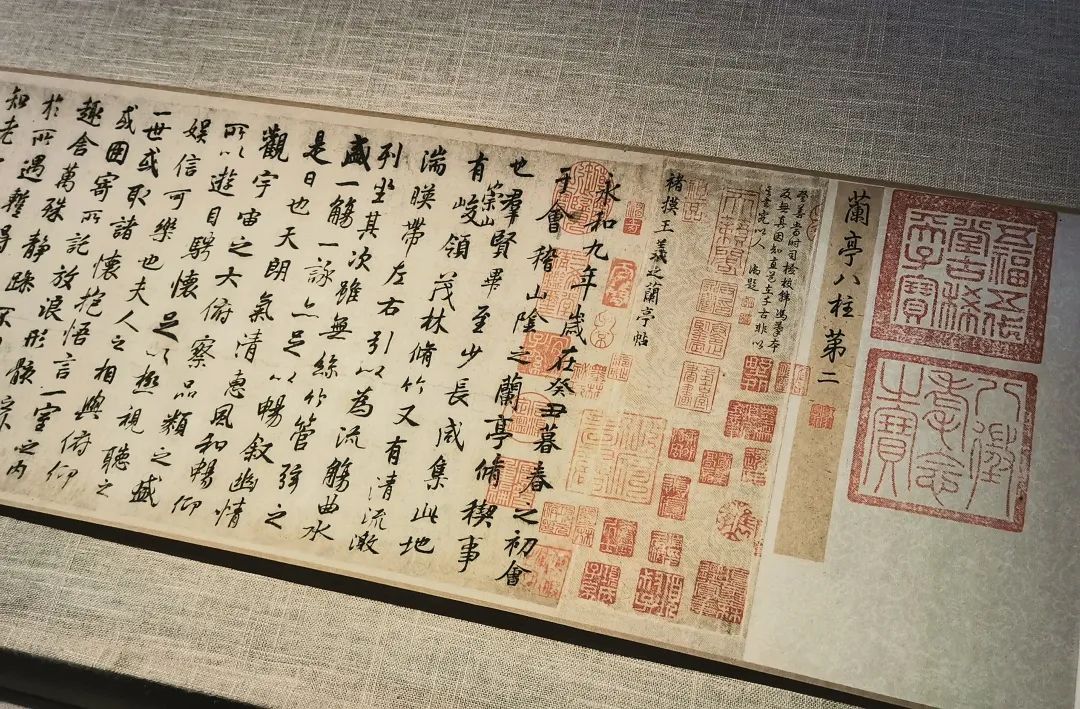
The "Preface to the Orchid Pavilion Collection" ("Lanting Xu") is arguably Wang Xizhi's most famous work. Written in 353 during a gathering of poets at the Orchid Pavilion in Zhejiang, the piece exemplifies the semi-cursive script and is celebrated for its rhythmic beauty and expressive power. The Preface describes the gathering's idyllic setting and the transience of life, themes that resonate deeply with Chinese philosophical thought. Upon its creation, "Lanting Xu" was immediately recognized as a masterpiece, and it has been revered ever since. Its influence is seen in the works of later calligraphers, and it is often studied as a quintessential example of Chinese calligraphy.
Legacy and Influence
Wang Xizhi's impact on Chinese calligraphy is profound and enduring. His style and techniques became benchmarks for excellence, particularly during the Tang Dynasty, when Emperor Taizong sought to emulate his work. The emperor's admiration for Wang Xizhi elevated the status of his calligraphy, encouraging countless scholars and artists to follow in his footsteps. Wang's influence extends beyond the technical aspects of calligraphy; he embodied the ideal of the literati, an educated elite who contributed to the cultural and intellectual fabric of society. His work serves as a bridge between art and philosophy, reflecting the values and aesthetics of Chinese culture.








